HALALAN TOYYIBAN: A GUIDE TO CHOOSING FOOD AT RAMADAN BAZAAR
By: Dr. Rozzamri Ashari
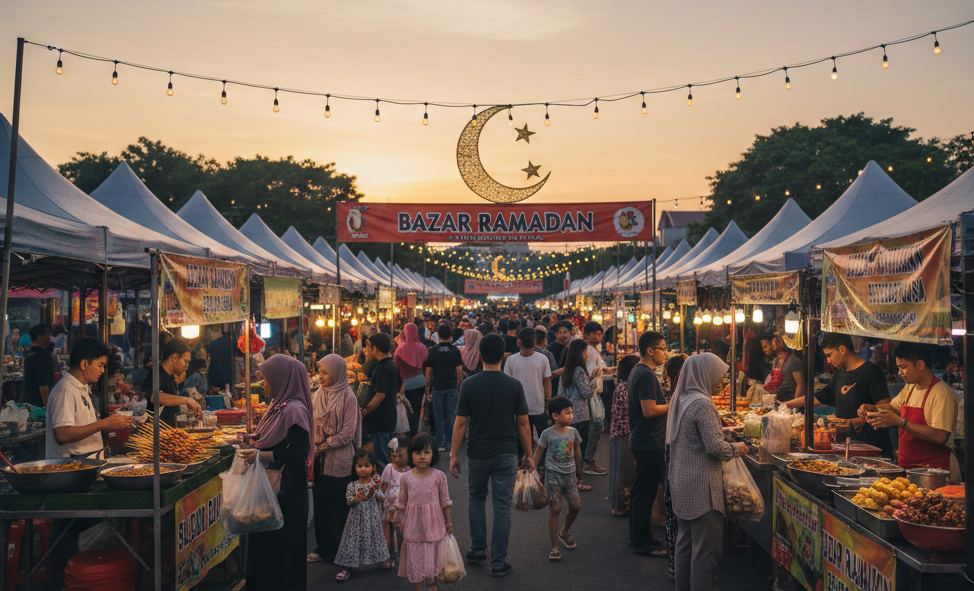
Throughout this month, the Ramadan bazaar is once again lively. For urban people, buying food for breaking the fast is a practical and time-saving option. Therefore, the Ramadan bazaar is a seasonal economic space that is the heart of food preparation for thousands of consumers every day.
However, consumers cannot ignore the aspect of food safety. The choice of food for breaking the fast is very critical because it is the main source of energy after a day of fasting.
In this context, the principle of Halalan Toyyiban should be used as a basis for consideration. This concept emphasizes that food must not only be halal, but also clean, pure and safe to eat. Toyyib means that the food is not harmful to health and is processed and handled prudently.
Therefore, understanding this principle needs to be translated into action when making choices at the Ramadan bazaar.
However, the responsibility for maintaining food safety does not lie solely with traders. As smart consumers, we also need to play a role by making assessments before buying.
Among the practical steps that can be implemented is the concept of “look and smell”, which is to avoid food that looks undercooked or smells suspicious. In addition, prioritize freshly cooked or still hot food and ensure that food is always covered to avoid contamination by dust and flies.
In addition, choose traders who use clean food tongs or gloves, rather than touching food with bare hands. The environment of the premises should also be given attention, including ensuring that the sales area is clean and away from open drains or garbage dumps.
This sensitive and meticulous attitude may seem small, but it has a big impact on the well-being of the family. There are Food Hygiene Regulations 2009 that set certain obligations for traders to ensure consumer safety.
Among them, traders must include having a food handling training certificate, getting a typhoid injection and undergoing a health check. In addition, traders must maintain personal sanitation, wear clean clothes and ensure that equipment and sales areas are free from pests.
This regulation was created to protect the community as consumers from unwanted health risks.
So, the selection of food at the Ramadan bazaar must meet halal and safe criteria in line with the principle of Halalan Toyyiban. It is not just about satisfying the appetite after a day of fasting, but rather a trust in the body that Allah SWT has lent to us.
Date of Input: 26/02/2026 | Updated: 26/02/2026 | saidatul.halim
MEDIA SHARING