Pusat Kokurikulum dan Pembangunan Pelajar UPM, 04 Mac 2026 -
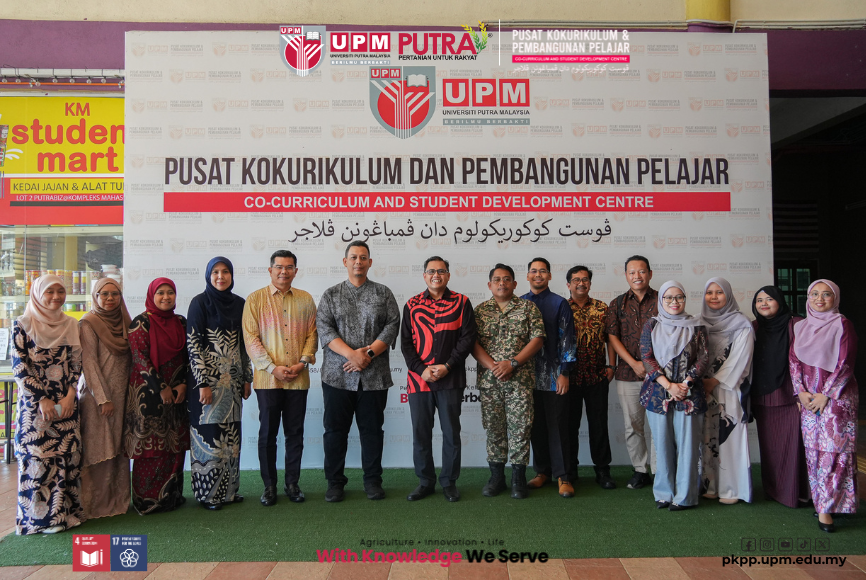
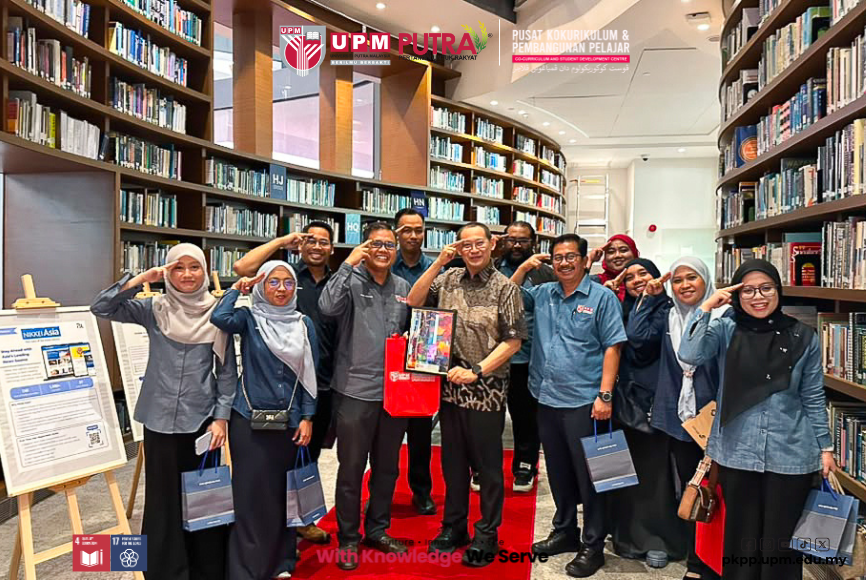
On 4 March 2026, the Centre for Co-Curriculum and Student Development of Universiti Putra Malaysia (PKPP), Universiti Putra Malaysia held a Discussion on the Equivalence Guide for Credit-Based Co-Curriculum Course Activities to examine, evaluate and refine guidelines relating to the implementation and recognition of co-curricular activities among university students.
This discussion session was held as one of the ongoing initiatives of the PKPP to ensure that the implementation of Credit-Based Co-Curriculum Courses is always relevant, structured and in line with current higher education policies and needs. In addition, this effort also aims to ensure that every co-curricular activity carried out by students can be assessed fairly and systematically through a clear and orderly equivalence mechanism.
The discussion involved several key officers who play an important role in the management of the university's co-curricular activities. Among those present were the Director of the PKPP, Mursyid Arshad, the Deputy Director of the PKPP, Rozzamri Ashari, and Dahlan Ismail Abu Bakar. Their presence in this session was intended to discuss in detail the aspects of implementing the equivalence of activities involving co-curricular courses for credit.

Throughout the discussion session, various issues were raised including the method of assessing student activities, the suitability of the types of activities that can be given equivalence recognition, as well as the documentation and monitoring process to ensure that each student's involvement in co-curricular activities can be recorded and evaluated more transparently. Improvements to the existing guidelines were also discussed so that they are more comprehensive and easy to understand by students, facilitators and university administration.
In addition, this discussion also emphasized the importance of ensuring that recognized co-curricular activities not only provide added value to students in terms of experience, but are also able to develop soft skills such as leadership, communication, teamwork and organizational management. Through this equivalence approach, students who are active in various activities outside the classroom have the opportunity to obtain academic recognition commensurate with their efforts and commitments.
Efforts to streamline these equivalence guidelines are also hoped to help strengthen the co-curricular management system at the university level. With clearer and more structured guidelines, the implementation of Credit-Based Co-Curriculum Courses can be carried out more effectively, while ensuring that each activity carried out has a positive impact on the overall development of students.
It is hoped that the results of this discussion will form the basis for improving existing guidelines and help further improve the effectiveness of the implementation of Credit-Based Co-Curriculum Courses at Universiti Putra Malaysia. Through this ongoing effort, the RMCP is committed to continuing to strengthen the role of co-curriculum as an important platform in shaping students who are holistic, competitive and ready to face future challenges.
Date of Input: 16/03/2026 |
Updated: 16/03/2026 | saidatul.halim
MEDIA SHARING